Thinking
Thinking puzzles measure whether you can reason from the given conditions to the one answer that holds, instead of trying options until something fits. Every puzzle here has exactly one solution and every step can be justified, so nothing needs to be guessed.
Thinking3 games
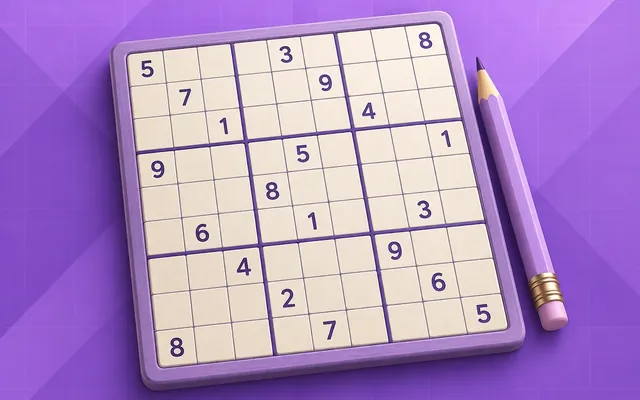 ThinkingSudokuMost of the grid is already filled. Finish the marked cells as fast as you can, and see what the clock says.PlayAbout 1 min
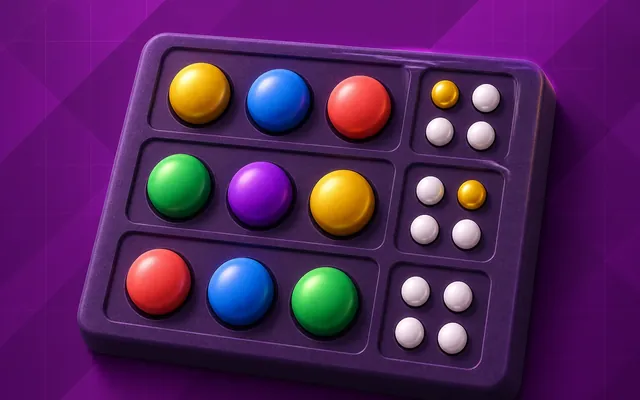 ThinkingCode BreakerGuess the hidden colour code. Every guess comes back with two numbers — how many pegs are exactly right, and how many are the right colour in the wrong place.PlayAbout 2 min
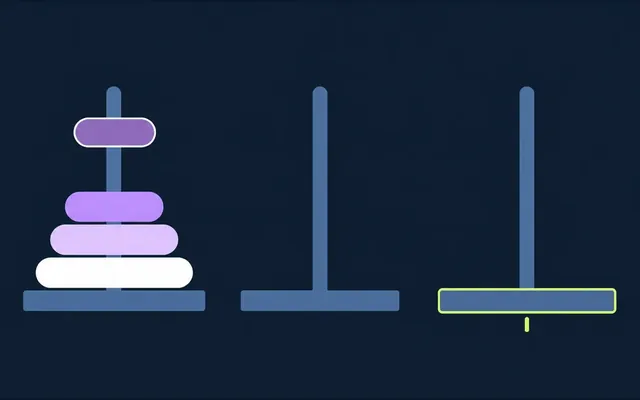 ThinkingTower of HanoiMove four disks to the right-hand peg, then compare your move count with the fixed 15-move shortest route.PlayAbout 1 min
What these puzzles measure
This category tests deductive reasoning: starting from stated conditions and eliminating possibilities until one remains. It does not test general knowledge and it does not reward fast arithmetic -- every fact you need is already on screen.
There is one standard for whether a puzzle is well made: can it be finished without trial and error. A good sudoku always offers a next move you can explain out loud. A puzzle that requires assuming a 5, walking into a contradiction and backing out is testing patience, not reasoning, and the puzzle bank here is built to the first standard.
Who plays these
Three groups: people who want something to do that needs no opponent, no team and no fixed session length; people preparing for reasoning sections of an exam and looking for practice; and people who want their mind occupied before sleep without being wound up by it.
Puzzles have one practical advantage the timed tests do not: you can stop mid-way. Reaction tests are ruined by an interruption. A sudoku waits -- the conditions are still on the board when you come back, and so is your line of reasoning.
How to read your score
Puzzles are scored on time and moves, not on right or wrong. Every puzzle is solvable by construction, so finishing is not the achievement -- how long it took and how many times you backed up is.
Scores from different difficulty tiers do not compare. Six minutes on an intermediate grid and twenty on a hard one say nothing about which run was better, because changing tier changes the puzzle. Scores are recorded per tier, and progress means beating your own times inside one tier.
FAQ
What games are good for logical thinking
Does every sudoku have only one solution
How do I get started with sudoku
What sudoku techniques should I learn next
Does sudoku improve your logical thinking
How do you play mastermind
How long does a puzzle take
Is sudoku a maths puzzle
Your scores are stored in this browser only. This site collects no personal data and never asks you to sign up.