Queens Puzzle
Solve a 7×7 logic grid: place one queen in every row, column and color region, with no two queens touching.
This measures how long it takes you to reason one whole board through.
One queen in every row, every column and every colour area — as fast as you can.
- One queen per row
- One queen per column
- One per colour area
- No two may touch — diagonals count too
A queen rules out all eight cells around it, corners included.
First time here? Take this board as your own baseline — finish a second one and you will have something to compare it against.
This is for getting to know yourself and for practice. It is not a clinical or intelligence assessment.A non-standardised adaptation: these results are not interchangeable with any clinical scale.
How to read your score
| Score | What it means |
|---|---|
| Under 30 seconds | A Queens Puzzle time under 30 seconds on the Elimination tier falls in this page's fastest design-time reference band. It is not a player percentile; compare it only with your own Elimination-tier times. |
| 30 to under 50 seconds | A Queens Puzzle time from 30 to under 50 seconds on the Elimination tier falls in the fluent design-time reference band. A result in this range meets the time part of the promotion target; it counts toward promotion only when no queen was removed. |
| 50 to under 80 seconds | A Queens Puzzle time from 50 to under 80 seconds on the Elimination tier falls in the steady design-time reference band. Compare your recent five-round median at this tier instead of judging your progress from this one result. |
| 80 to under 150 seconds | A Queens Puzzle time from 80 to under 150 seconds on the Elimination tier falls in the getting-started design-time reference band. Replay the same tier and check whether your recent five-round median becomes shorter. |
| 150 seconds or more | A Queens Puzzle time of 150 seconds or more on the Elimination tier is a personal starting point, not an ability label or population rank. Use it as a baseline, then compare later Elimination-tier rounds with your own median. |
These Queens Puzzle time bands are design-time references for the Elimination tier, not player statistics or pilot data. They cannot show how many people you beat. Compare only with your own earlier rounds and recent five-round median at the same tier.
How to play
- How do you start playing Queens Puzzle?: Press Start. On your first visit, complete a 5×5 teaching board by finding the two missing queens; this board is not timed or scored. Then continue to the scored board. It stays covered for one second, and your time starts when the grid appears.
- How do you place and remove a queen in Queens Puzzle?: Tap an empty cell to place a queen. Tap that queen again to remove it; the cell keeps your dashed cross as a note. Tap once more to clear the cross. Keep using this three-step cycle until the seventh legal queen ends the round automatically.
- What do crosses mean in Queens Puzzle?: A solid cross marks a cell blocked by a queen in the same row, column or color region, or by a queen touching it. Tapping that cell tells you which rule blocks it. A dashed cross is only your own note, so you can clear it and use the cell later if it is otherwise legal.
- How do you read a Queens Puzzle score?: Your Queens Puzzle score is the time from the grid appearing to the seventh legal queen, and lower is better. There are no added time penalties. Read the removal and refused-tap counts beside it, then compare your recent five-round median and personal best only with results from the same tier.
What this measures
The Queens Puzzle board is 7×7 and divided into seven connected color regions. Place seven queens so that every row, every column and every color region contains exactly one. No two queens may touch, including at a diagonal corner; queens on longer diagonals are allowed.
Every Queens Puzzle board on this page has exactly one solution and can be finished by reasoning alone. You never need to gamble on a cell: if you feel forced to guess, rescan the row, column or color region with the fewest open cells.
The board does the bookkeeping you would otherwise do on paper: the moment you place a queen, every cell it rules out is crossed. Cells that are crossed cannot be tapped into a queen, and a tap on one tells you the reason rather than doing nothing. A row where every cell is crossed is a dead end — lift a queen and try elsewhere.
Difficulty comes from the deductions a board needs, not its size. Elimination boards use rows, columns or regions with one open cell left. Region Lock boards also require noticing when a region's remaining cells all lie on one line. Two consecutive rounds finished in 50 seconds or less with no queen removed move you up; one round outside that target moves you back.
Only a finished Queens Puzzle round produces a score. Leaving or refreshing the page, switching the tab away, ending the round, an interruption that voids the board, or reaching ten minutes without finishing saves no partial time. More than seven queen removals still leaves the result in your history, but that round cannot replace your same-tier personal best.
FAQ
What does the Queens Puzzle measure?
Queens Puzzle times visual reasoning on a 7×7 board. You scan color regions, track the one-queen limits for rows and columns, and update possible cells after each move. The result describes this round of this non-standardized puzzle; it is not an intelligence or clinical assessment.
How do you solve a Queens Puzzle step by step?
Solve Queens Puzzle by finding forced queen cells first. Start with the smallest color region, place any forced queen, and rescan every row, column and region after each move. The board automatically crosses out cells blocked by a queen. If no unit has one cell left, check whether a region's remaining cells all lie in one row or column, which excludes the rest of that line.
What is a good time for a 7×7 Queens Puzzle?
Under 50 seconds is a fluent Elimination-tier time here. Under 30 seconds falls in the fastest design reference band. These ranges are not player statistics and do not rank you against other people. For a meaningful comparison, use your own recent five-round median from the same tier.
Why can't queens touch diagonally in a Queens Puzzle?
Diagonal touching is forbidden by Queens Puzzle rules. The puzzle uses the same adjacency rule as one-star Star Battle, so queens cannot occupy neighboring corner cells. This is not the chess or N-Queens rule: queens two or more cells apart on the same diagonal are allowed here, provided their rows, columns and color regions differ.
Does every Queens Puzzle have one solution without guessing?
Every Queens Puzzle board here has exactly one solution. Each one can be completed without guessing. That claim applies to this site's checked board set, not to every puzzle found elsewhere. If you are stuck, recount the open cells in the tightest row, column or color region.
Related games
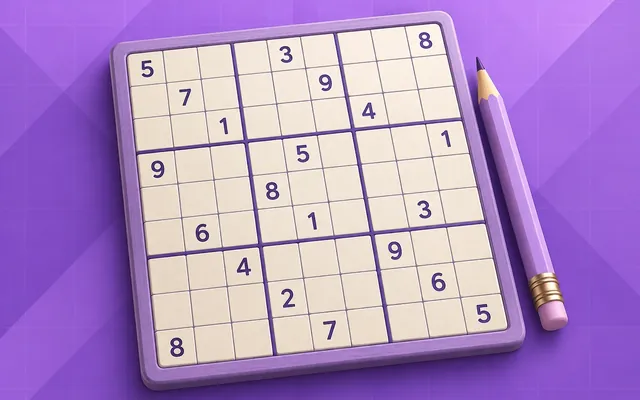 ThinkingSudokuMost of the grid is already filled. Finish the marked cells as fast as you can, and see what the clock says.PlayAbout 1 min
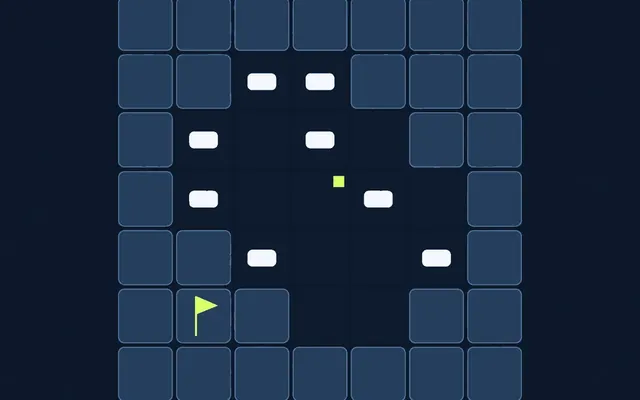 ThinkingMinesweeperA 7×7 Minesweeper board with 6 mines, guaranteed solvable without guessing. Open all 43 safe cells as fast as you can — your clear time is the score.PlayAbout 1 min
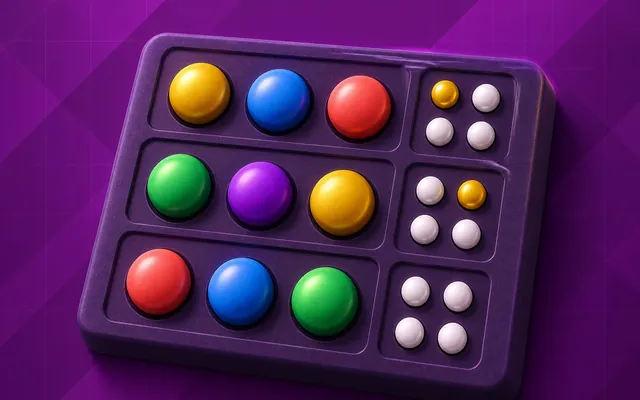 ThinkingCode BreakerGuess the hidden colour code. Every guess comes back with two numbers — how many pegs are exactly right, and how many are the right colour in the wrong place.PlayAbout 2 min
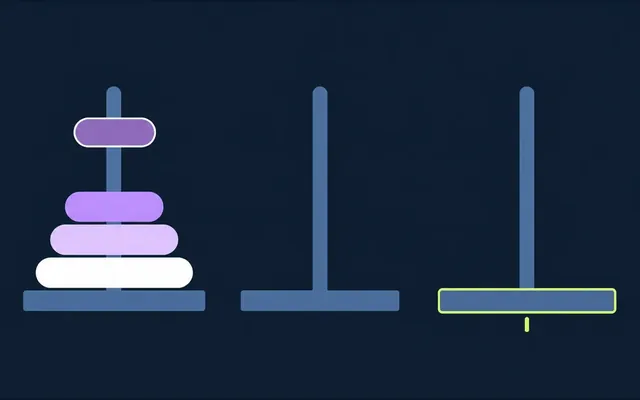 ThinkingTower of HanoiMove four disks to the right-hand peg, then compare your move count with the fixed 15-move shortest route.PlayAbout 1 min
This puzzle reports how long one board took you today. It is for getting to know yourself and for practice, not a clinical or intelligence assessment, and it is a non-standardised adaptation whose results are not interchangeable with any clinical scale.
Last updated: 2026-10-23 · Scores stay on this device