Reaction Time Test
Wait for green, then press. See how quickly you react.
Wait for green. Then press.
See how quickly you react to a visual signal.
2 practice attempts · 12 scored attempts
Click, tap, or press Space / Enter
How to read your score
| Score | What it means |
|---|---|
| Under 250 ms | A reaction time score under 250 ms is in this test’s fastest band. See whether you can keep a similar time over a few rounds. This band does not tell you how many people you outperform. |
| 250-299 ms | A reaction time score of 250–299 ms is in this test’s second-fastest band. Compare with your earlier rounds on the same device to track changes. |
| 300-399 ms | A reaction time score of 300–399 ms is in the middle of this test’s five bands. It is not a population average or a definition of a normal reaction time. |
| 400-549 ms | A reaction time score of 400–549 ms is in this test’s second-slowest band. Try another round when you are ready and see whether the results are similar. |
| 550 ms and over | A reaction time score of 550 ms or more is in this test’s slowest band. Make sure the signal is easy to see and the controls are comfortable, then try again. One round does not define your usual reaction speed. |
These bands help you read your reaction time in this test. They are not rankings against other players or standards for health or ability. Lower is faster; compare rounds on the same device with the same input method.
How to play
- Practise twice: Press Start and try two practice attempts. These do not count toward your score.
- Press when it turns green: Wait while the box says WAIT. When it turns green and shows a white circle and PRESS, click or tap the response area, or press Space or Enter.
- Wait for the signal: Each wait lasts 1–3 seconds. If you see Too early, wait for the next signal before pressing again.
- See your result: After practice, complete 12 scored attempts. You will see your main reaction time and fastest press. Lower times are faster.
What this measures
Wait for the box to turn green, then press as quickly as you can. Each signal follows a wait of 1 to 3 seconds.
Pressing before the signal, or less than 150 milliseconds after it, does not count. Wait for the next signal and try again. Each attempt allows up to three tries. If 1.5 seconds pass without a press, that attempt does not count and the test moves on.
You need at least 10 valid responses in the 12 scored attempts to get a result. Otherwise, start a new round. The two practice attempts never count toward your score.
A lower reaction time means a faster response. Your main score is the median: your valid times are sorted from fastest to slowest and the middle value is used. If there are two middle values, their average is used. One unusually slow press has less effect on this score than on an average. Your fastest valid press is shown separately.
Stay on this page until the round ends. Switching away, refreshing or stopping ends the round without saving a score.
To track your progress, compare several rounds on the same device using the same input method. A phone and a computer can give different readings.
FAQ
What is a good reaction time in this test?
Lower times mean faster responses, but this test cannot tell you how you rank against other people. Compare several of your own rounds on the same device instead of aiming for a universal target.
What does median reaction time mean?
Your valid times are sorted from fastest to slowest and the middle value becomes your score. With two middle values, their average is used. This keeps one unusually slow press from affecting the result as much as it would affect an average.
What does a simple reaction time test measure?
It measures how long you take to press after seeing a signal. There is no answer to choose: wait for green, then press.
How do I practise a reaction time test?
Get comfortable with waiting, seeing the signal and pressing. Avoid guessing when green will appear. Use the same device and controls, and compare your main scores over several rounds rather than just your fastest press. Improving here does not mean other abilities improve too.
Why does reaction time differ between a phone and a computer?
Touchscreens, mice and keyboards respond differently, and the display also affects the reading. Keep your device and input method the same when comparing your own scores.
Why does a reaction time test reject a false start?
The test asks you to press after seeing the signal. A press before green, or less than 150 milliseconds after it, does not count. After “Too early”, wait for a fresh signal instead of clicking repeatedly. Each attempt allows up to three tries.
Related games
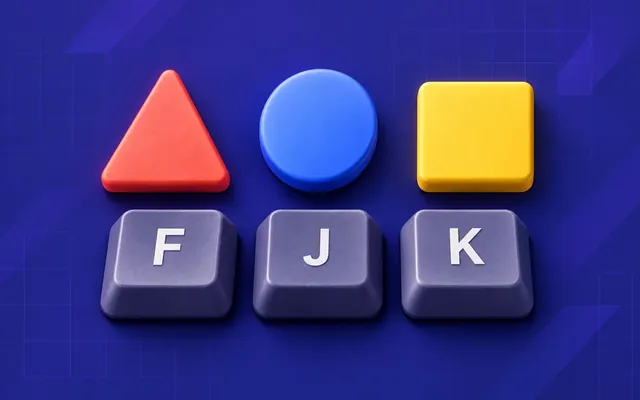 ReactionChoice Reaction Time TestFour shapes, four keys - press the one that matches.PlayAbout 45s
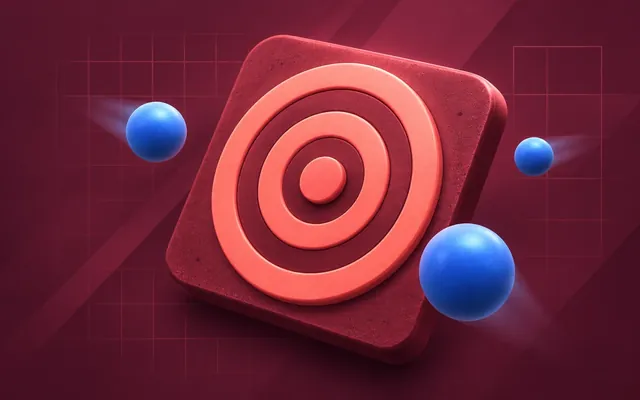 ReactionAim TrainerHit 30 targets as they jump around a fixed field and read your median time per target.PlayAbout 30s
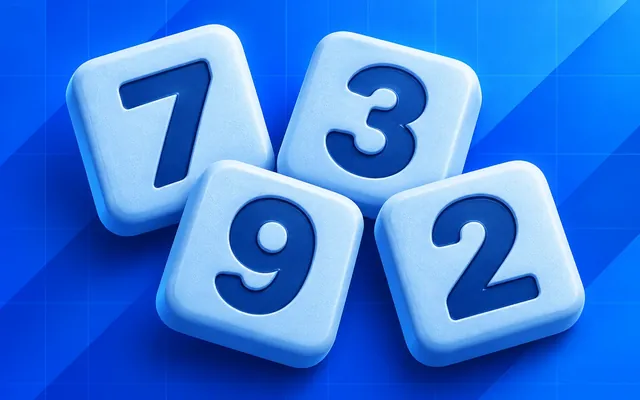 MemoryDigit Span TestDigits flash one at a time. Type them back in order and see how long a string you can hold.PlayAbout 60s
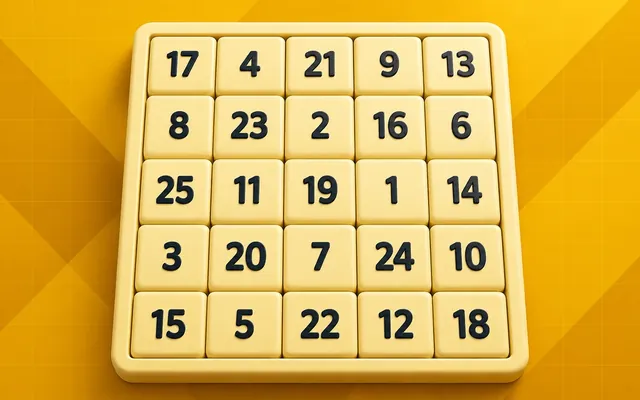 AttentionSchulte TableTap 1 to 25 in order on a shuffled grid and read your time in seconds.PlayAbout 40s
This test is for self-knowledge and practice only. It is a non-standardised test, not a clinical or intelligence assessment. Your score cannot determine your health or intelligence.
Last updated: 2026-09-08 · Scores stay on this device