Mental Rotation Test
Two block figures at different angles: same object turned, or mirror images? 18 items.
Same object turned, or mirror images? 18 items - more right is better.
- Two figures, one above the other
- Turns until they line up → Same
- Never lines up → Mirror
Same object, turned
Mirror images
First time? Two practice items first.
How to read your score
| Score | What it means |
|---|---|
| Below 72% right (12 or fewer of 18) | Fewer than 13 of the 18 mental rotation items right is below the cut this test uses, and no score is reported for such a round. With two answers per item, guessing alone lands here most of the time, so the round cannot say anything about how you did. It is offered again rather than scored. |
| 72% to 83% right (13 or 14 of 18) | 13 or 14 of 18 mental rotation items right works out to 72-83% accuracy. Most items were turned correctly and four or five were not. The figure is your own accuracy out of 18 items, not a ranking against other people. |
| 83% to 94% right (15 or 16 of 18) | 15 or 16 of 18 mental rotation items right works out to 83-94% accuracy, leaving two or three items unsolved. Compare it with your own recent rounds rather than with a published norm; this test has no reference sample. |
| 94% to 100% right (17 or 18 of 18) | 17 or 18 of 18 mental rotation items right works out to 94-100% accuracy - at most one item missed or timed out. At this level the interesting number is no longer the accuracy but the median time, and how much of it the 150-degree items cost you. |
This is a non-standardised adaptation, and the result cannot be exchanged with a clinical or standardised scale. These four bands are simply how many of the 18 items you answered correctly, and more right is better; they are not norms, not pass marks, and they do not say how many people you outscored. Accuracy counts items that ran out of time the same as wrong ones, because a denominator that shrank would reward stalling. One round also swings on its own, so read several of your own rounds rather than the latest one, and keep the device and input method the same when you compare.
How to play
- Answer the two practice items first: Two practice items come before anything is scored, one of each answer, and both tell you straight away whether you were right and why. They never reach your records.
- Compare the upper figure with the lower one: Each item shows the same arm-shaped solid twice, at two different angles around the vertical axis: 50, 100 or 150 degrees apart. The lower figure is either that object turned, or its mirror image.
- Press Same or Mirror: Press Same if some turn would bring the two into register, Mirror if no turn ever could. On a keyboard the left arrow key is Same and the right arrow key is Mirror. You have five seconds per item; a press before the figures appear does not count as an answer.
- Read your accuracy and your median time: The score is how many of the 18 you got right, so higher is better. Underneath it are your median time on the items you got right - the middle value once those times are sorted - and a three-bar chart of that time at 50, 100 and 150 degrees.
What this measures
Each item shows one arm-shaped solid built from ten cubes, drawn twice at two azimuths 50, 100 or 150 degrees apart. Your job is to decide whether the second drawing is that same solid turned, or its mirror image - a shape no amount of turning will bring into register.
The commonest way to lose a mirror item is to judge from the outline or by counting cubes. A mirror figure is built from the same ten cubes, with the same four arm lengths and the same three right-angle elbows, so no count tells it apart from the original - only the direction the arms turn in does. Pick one end of the figure, follow the arms along, and check whether each elbow turns the same way in both drawings.
The two answer buttons stay in the same place and keep the same meaning all round, so you never have to re-read them. A keyboard works too: left arrow for Same, right arrow for Mirror, and a key held down still counts as one answer. Tapping the figures themselves is not an answer, and the line under them will say so.
Two practice items run first, one 'same' and one 'mirror'. They give you the answer and a one-line reason. The 18 scored items give no right-or-wrong feedback at all, only a neutral 'recorded': if you could see a running score you would answer the remaining items differently, and all 18 are meant to be answered under the same conditions.
The 18 scored items are balanced by design: three angles, times same and mirror, times three repeats. So every angle appears six times and neither answer is more common than the other.
A press before the figures appear, or within 400 milliseconds of them appearing, is recorded as a false start rather than an answer. Nothing can be decided that fast on this task - the easiest 50-degree item takes about a second even in a laboratory - so such a press is a guess already in flight.
No answer within five seconds ends the item. It is not scored as a measurement, but it still counts against you in the accuracy: the denominator is always 18, so sitting out the hard items cannot flatter the number.
A round gives no score at all if more than four items went unanswered or were false starts, if fewer than 13 of the 18 were right, or if the page stalled badly enough that too few of your times can be trusted. The 13 is not a pass mark set by taste: with two choices per item, guessing reaches 13 of 18 about 4.8% of the time, so below it the round genuinely cannot be told apart from guessing.
As you get better at this task, the accuracy usually tops out before the time does. Once you are at 17 or 18 of 18 there is nothing left to gain there, and the number worth watching is the median time - and inside it the 150-degree bar, which is where the seconds are still there to lose.
Stay on this page until the round ends. Moving to another tab or window, refreshing or stopping ends the round without saving anything, and there is no resume: half a round of reaction times is not a measurement that can be finished later.
If the page stutters badly in the middle of a round, the round is thrown away instead of reported. The pause would otherwise be counted as part of your time, and time you did not spend deciding is not worth keeping.
FAQ
What is a mental rotation test?
It is a spatial task in which you see one three-dimensional figure drawn twice at different angles and decide whether the second drawing is the same object turned or its mirror image. The form used here follows Shepard and Metzler's 1971 paradigm: ten-cube arm figures, compared in pairs, answered against a clock. The paradigm is public; these figures, the item bank and the band table are the site's own.
What is a good mental rotation score?
On this test, accuracy is out of 18 and more right is better, and 15 or 16 right (83-94%) falls in its second-highest band. What it cannot tell you is where you sit among other people, because there is no reference sample behind it. Use the four bands to read your own accuracy, then compare several of your own rounds on the same device.
How long does one mental rotation item take?
A few seconds per item is ordinary, and this test reports your own median time on the items you got right rather than an average for everyone - it has no reference sample, so it publishes no average to measure yourself against. For scale, the practised participants in Shepard and Metzler's 1971 study needed about a second even on their easiest pairs, plus roughly another second for each 60 degrees of rotation. Anything under 400 milliseconds is treated as a false start rather than an answer, because the comparison cannot be finished that fast.
Why does mental rotation take longer at bigger angles?
Because the usual way of solving these items is to turn one figure in your head until it lines up with the other, and turning further takes longer. Shepard and Metzler reported response time rising roughly linearly with the angle between the two figures, at a rate of about 60 degrees per second in their highly practised participants. That is why this test reports your median time separately at 50, 100 and 150 degrees - the rising pattern is something you can check in your own three bars.
What does the Shepard-Metzler task measure?
It measures how quickly and accurately you can compare two views of one solid and decide whether they can be brought into register by turning. That is one specific spatial skill, measured on one specific set of figures. It is not a general ability score and not a diagnostic instrument.
Is the mental rotation test a spatial ability test?
It covers one part of spatial ability: holding a three-dimensional form in mind, turning it, and deciding whether it matches a second view. A fuller spatial battery would also ask for things this test never shows you, such as folding a flat shape into a solid, reading a cross-section or judging distances. So your accuracy here describes this task on these figures and nothing wider.
How do you practice mental rotation?
Work through the whole figure instead of racing: pick one end, follow the arms along, and compare which way each elbow turns. Keep the device, the viewing distance and the input method the same, and judge a run of rounds rather than one. A false start under 400 milliseconds is discarded and an item you let run out counts as a miss, so speed bought by guessing costs you accuracy. Practice will make you faster and more accurate at this task; read a falling time as a skill at this task rather than as a change in anything broader, because the evidence for that kind of transfer is weak (Simons et al., 2016).
Why does a mental rotation round sometimes give no score?
A round is voided when one of three checks fails, and no number is reported. Either more than four of the 18 items went unanswered or were false starts, or fewer than 13 were right - which guessing reaches about 4.8% of the time, so below that the round cannot be distinguished from guessing - or the page stalled long enough that too few of your times can be trusted. In all three cases the honest answer is no number, so the round is offered again instead.
Related games
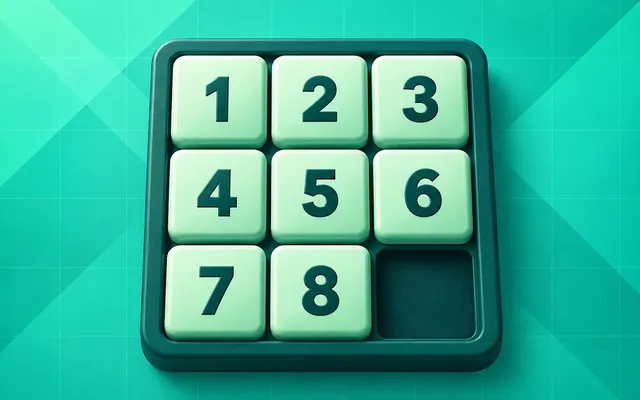 SpatialSliding PuzzlePlay three 3x3 boards by sliding tiles 1 to 8 into order. Lower move totals are better, and every score is compared with the exact 42-move minimum.PlayAbout 2-3 min
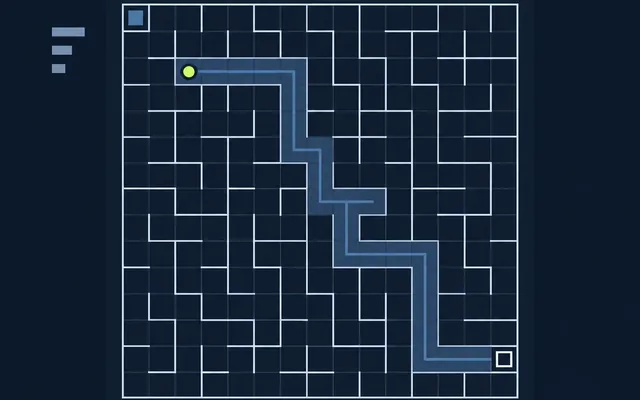 SpatialOnline Maze GameSolve a 15x15 maze online and test your path efficiency. Lower is better: 1.00 means you reached the exit with no extra steps.PlayAbout 1-2 min
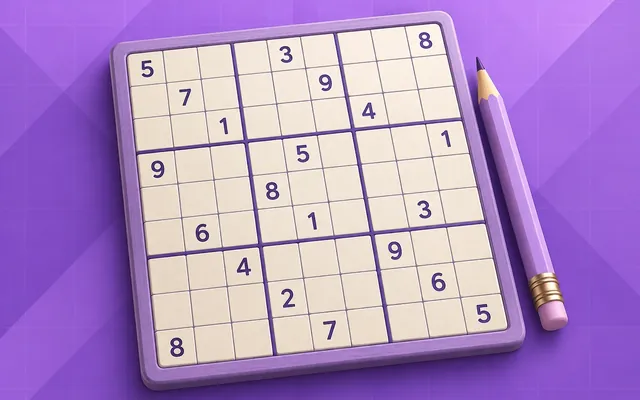 ThinkingSudokuMost of the grid is already filled. Finish the marked cells as fast as you can, and see what the clock says.PlayAbout 1 min
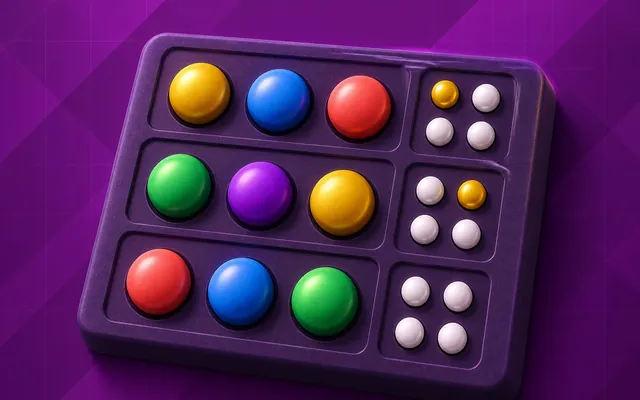 ThinkingCode BreakerGuess the hidden colour code. Every guess comes back with two numbers — how many pegs are exactly right, and how many are the right colour in the wrong place.PlayAbout 2 min
This test is for self-knowledge and practice only. It reports one run of one task and is not a clinical or intelligence assessment.
Last updated: 2026-09-20 · Scores stay on this device