Flanker Test
Five arrows, one answer: follow the middle one and ignore its neighbours.
Only the middle arrow counts.
Score = median time on the conflict trials you get right. Lower is better.
- A row of five arrows appears in the middle.
- Press the side the middle one points at - ignore the other four.
- Answer within 1 second, using the keys below. The wait is a different length every time, so wait for the arrows rather than a beat. The arrow keys work too.
How to read your score
| Score | What it means |
|---|---|
| Under 400 ms | A median under 400 milliseconds on the incongruent trials of this arrow flanker test is fast, since every one of those trials asks you to read the middle arrow while four arrows point the other way. Faster is better, and no reference sample stands behind this band, so it does not say how many people you outscored. Check your accuracy beside it: with two keys, answers that outrun the decision show up as wrong sides rather than as a faster time, so a quick median next to several errors is a rushed round rather than a good one. |
| 400 to 500 ms | A median of 400 to 500 milliseconds on the incongruent trials of this arrow flanker test is a brisk result, and lower is better. No reference sample stands behind this band either, so it describes the round rather than your rank. The most useful number to put beside it is your own congruent baseline from the same round: the gap between the two is what the conflicting arrows cost you, and that gap tells you something the median alone cannot. |
| 500 to 620 ms | A median of 500 to 620 milliseconds on the incongruent trials is the middle band of the five this site defines for its arrow flanker test, and it is a normal place for a careful first round to land. Read it two ways: against your accuracy, which tells you whether the time went into deciding or into pressing, and against your own congruent baseline, which tells you how much of it was interference. Published flanker figures use different arrow sizes, spacings and response devices, so they are not comparable with this number. |
| 620 to 800 ms | A median of 620 to 800 milliseconds on the incongruent trials of this arrow flanker test usually means you are checking the middle arrow twice before answering, which is common on a first round and keeps accuracy high. Read it against your congruent baseline: if the baseline is nearly as slow, the whole round was cautious rather than interfered with, and the thing to change is simply answering as soon as you have the middle arrow. No reference sample stands behind this band. |
| 800 ms or more | A median of 800 milliseconds or more on the incongruent trials of this arrow flanker test is approaching the one-second limit allowed for a single trial, so some trials in that round may also have run out of time. No reference sample stands behind this band, and a slow round says nothing about you beyond that round. If it was your first round on this layout, the number still has learning the two keys inside it - run a second round once the keys feel familiar and read the two against each other. |
These five bands are descriptive magnitude ranges for this site's own arrow flanker task, and faster is better. They are not population norms, not percentiles and not pass marks, and they do not say how many people you outscored. Three things are worth knowing about how this page's conflict cost relates to the Stroop test's: first, they come from different stages - the flanker conflict is between things you see side by side, while the Stroop conflict is between reading a word and naming its ink; second, they are measured on different scales here, because the two tests use different trial counts, time limits and response layouts; third, and following from the first two, the two numbers can neither be added together nor converted into each other, and a larger one on either page does not predict the other. Read a run of your own rounds rather than one, keeping the device and the input method the same.
How to play
- Learn the two direction keys: Two wide keys sit along the bottom, left key on the left and right key on the right. They never move, within a round or between rounds, and they are already on screen before you start so there is no mapping to learn.
- Answer the four practice trials: Four unscored practice trials come first. They mark the key you pressed with a tick or a cross, and nothing they produce reaches your records. The scored block starts only when you press the button on the handover screen.
- Watch the small cross, then read the middle arrow: A small cross marks the exact spot the middle arrow will appear in, for somewhere between 0.4 and 0.5 seconds. Then five arrows replace it in one row. Press the side the middle one points at and ignore the four around it, whichever way they point.
- Answer between 0.2 and 1 second: A press before the arrows appear, or within 200 milliseconds of them, is recorded as a false start rather than an answer. No answer within 1 second ends that trial. Either way the trial is used up and is not run again.
- Read your median, your baseline and the gap: The score is your median time on the conflict trials you answered correctly, so lower is better. Beside it are your accuracy and your own congruent baseline - the same median taken from the trials where all five arrows agreed. The difference between the two is the conflict cost, reported as a separate line.
What this measures
This is a non-standardised adaptation, and the result cannot be exchanged with a clinical or standardised scale. A row of five arrows appears in the middle of the panel. Only the middle one is the question: press the side it points at. On half the trials the four arrows around it point the same way, and on the other half they point the opposite way, which is the whole of the task. The five arrows are drawn identically - same size, same stroke, same ink - and nothing on screen marks which one is the middle, so the fixation cross that precedes them is where you should already be looking.
A round is 4 unscored practice trials and 32 scored ones. Across the scored block there are exactly 16 trials where the arrows agree and 16 where they disagree, and exactly 16 of each answer side, so no round can be made easier or harder by the draw. The order is different every round and stays balanced, and one side never runs long enough to be worth settling into.
A trial runs like this: a small cross marks where the middle arrow will appear, for a wait that changes every trial between 0.4 and 0.5 seconds, then the five arrows replace it on the same centre. The row stays until you answer or until one second has passed; there is no mask and nothing is hidden from you. The wait is a different length every trial, so there is no beat to press along with - watch the cross and answer once the arrows are there.
A press during the cross, or faster than 200 milliseconds after the arrows, is a false start: a left-right choice under conflict cannot be decided that fast, so such a press is a guess that was already on its way. It is recorded, the trial is used up, and it is not run again.
The main score is the median of your correct conflict trials - the middle value once those times are sorted. A median rather than an average, because one slip should not move a result taken from sixteen trials. Unusually long times - the trial where you blinked or the hand left the key - are dropped before the median is taken, so they do not enter your score.
Your congruent baseline is the same median taken from the trials where all five arrows agreed, cleaned the same way. It answers the question the conflict median cannot answer on its own: were you slow today, or were you slowed down by the flankers? A slow median with a matching slow baseline is a slow round; a slow median with a quick baseline is interference.
The conflict cost is simply the conflict median minus your own baseline, and it is shown as a side note rather than as a score. A difference between two medians taken from sixteen trials each moves a lot from round to round - far more than either number does on its own - so it is worth watching across several rounds and not worth reading from one. It stays a plain millisecond difference: this page does not turn it into a ranking, so it cannot tell you how many people you outscored, and it is kept off your history curve.
A round gives no score at all unless three things hold: at least 85 percent of the trials you answered were answered correctly, at least 8 conflict trials are left after the cleaning, and at least one of the agreeing trials is left too, since that is what your baseline is taken from. Answering at random cannot buy a fast median - it costs you the round instead.
Two mistakes account for most of a first round. One is answering from the arrows at the ends, which is right on every agreeing trial and wrong on every disagreeing one - accuracy near half with a comfortable median is the signature. The other is checking twice before answering, which keeps accuracy perfect and pushes both medians up together. Your median, your baseline and your accuracy are reported separately so you can tell which is happening to you.
Read a run of rounds rather than one. A median taken from sixteen trials moves on its own between rounds, and the conflict cost moves more. Keep the same device and the same input method, run several rounds across a few days, and compare that group with an earlier one. Your first round is usually your slowest, because it still has learning the two keys inside it.
Stay on this page until the round ends. Moving to another tab or window, refreshing or stopping ends the round without saving anything, and there is no resume: half a round of reaction times is not a measurement that can be finished later. If the device stalls long enough to spoil the timing, the round is ended for the same reason.
Your own history is kept per input method, so a personal best set on a keyboard is not beaten by a slower touchscreen round and the two are never compared. Nothing about the round leaves your browser: what is saved is a handful of milliseconds, the conflict cost, your accuracy, the input method and the language you played in.
FAQ
What is the flanker task?
It is a selective-attention test where a target is surrounded by distractors that point the same way or the opposite way. On this page five arrows appear in a row and you answer the middle one, so every trial asks you to use what is in the middle and ignore what is beside it. The paradigm is public and goes back to Eriksen and Eriksen in 1974; this arrow adaptation, its timings and its band table are the site's own.
What is the flanker effect?
It is the extra time a conflict trial costs compared with an agreeing one, measured on the same person in the same round. Here it is your median on the trials where the outer arrows disagreed minus your median on the trials where they agreed. It exists because the flanking arrows are processed too, and when they point the other way they prime the wrong answer, which then has to be suppressed.
What is a good flanker effect in milliseconds?
There is no single good figure, and this test publishes no average because it has no reference sample to draw one from. What matters more is that the number is noisy: it is a difference between two medians taken from sixteen trials each, so it swings widely between rounds even when nothing about you has changed. Treat it as a side note across several rounds, not as a score for one.
What is the average reaction time on a flanker task?
This page publishes no average, because it has no reference sample to take one from. What it gives you instead is a five-band table for its own arrow task: an incongruent median under 400 ms is fast, 400 to 500 ms is brisk, 500 to 620 ms is the middle band, 620 to 800 ms usually means a second look before answering, and 800 ms or more sits near the one-second limit for a single trial. Published flanker figures use different arrow sizes, spacings and response devices, so they cannot be compared with your number here, and none of these bands tells you how many people you outscored.
What does the flanker task measure?
It measures how quickly you can act on a target while nearby distractors push you towards the other answer, on your device and with your input method, reported as your median time over the correct conflict trials. That is one narrow thing: it is not a general attention score, not a measure of concentration in daily life and not a diagnostic instrument.
What is the difference between the flanker task and the Stroop test?
Both pit a correct answer against an interfering one, but the interference comes from different places. In the flanker task the conflict is spatial: the distractors sit beside the target and compete with it while you are still deciding what you saw. In the Stroop test the conflict is between two things the same object means - the word you read and the ink it is printed in. The two effects are measured on different scales here and cannot be added together or converted into each other.
Why are congruent flanker trials faster than incongruent ones?
Because on an agreeing trial all five arrows push towards the same key, so the distractors help rather than hinder. On a disagreeing trial the four outer arrows prime the opposite key, and that competing response has to be held back before the right one can go out. The time that holding back costs is exactly what the gap between your two medians reports.
How many trials does a flanker task need?
This version runs 4 unscored practice trials and 32 scored ones, split 16 conflict and 16 agreeing, which takes about 40 seconds. That is enough for a stable median on each side but deliberately not enough to make the difference between them stable - which is why this page reports the conflict cost as a side note and tells you it moves between rounds.
How do you improve inhibitory control on a flanker task?
Keep your eyes on the fixation cross rather than scanning the row, answer as soon as you have the middle arrow, and let a wrong trial go rather than carrying it into the next one. Keep the device and the input method the same between rounds and read a run of rounds rather than one. Practice makes people faster at this task; read a falling time as a skill at this task rather than as a change in anything broader, because the evidence for that kind of transfer is weak (Simons et al., 2016).
Why did my flanker round give no score?
A round needs three things: at least 85 percent of the trials you answered to be correct, at least 8 conflict trials left after unusually long times are dropped, and at least one agreeing trial left to take your baseline from. False starts, trials that ran out of time and moments when the device stalled all reduce what is left to score from, and the screen says which gate was missed. The honest answer in that case is no number, so the round is offered again instead.
Is the arrow flanker task the same as a reaction time test?
No. A simple reaction test asks only whether something appeared, and a choice reaction test asks which of several things it was. The flanker task adds a competing answer that is on screen at the same time as the right one, so what it times is deciding while being pulled the other way. That is why its times sit well behind a simple reaction measured on the same finger.
Related games
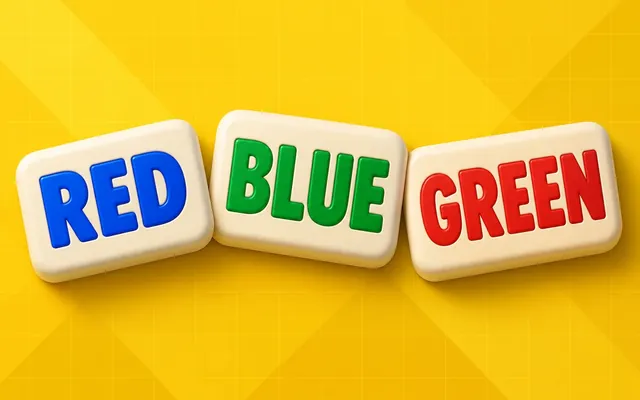 AttentionStroop TestName the ink, ignore the word. 20 scored trials, and your time on the mismatched ones.PlayAbout 60s
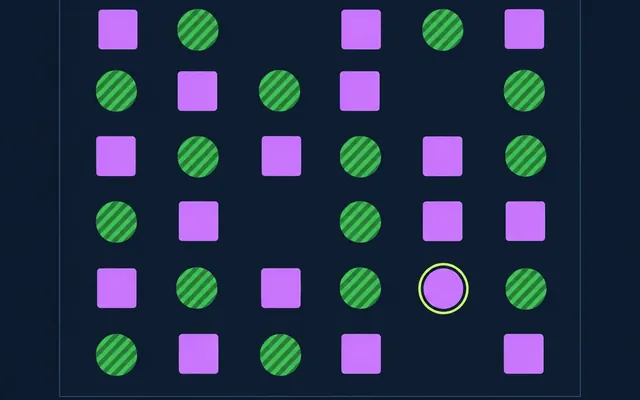 AttentionVisual Search TestFind the matching shape across 24 displays. Your score is your average search time in milliseconds, and lower is better.PlayAbout a minute
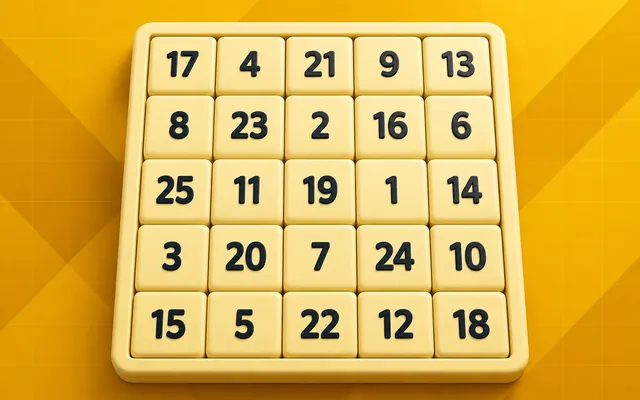 AttentionSchulte TableTap 1 to 25 in order on a shuffled grid and read your time in seconds.PlayAbout 40s
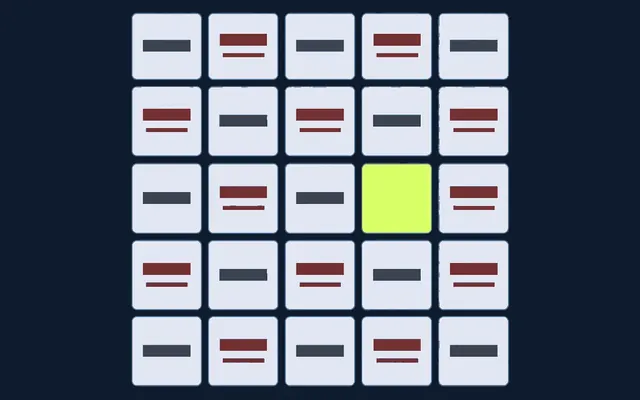 AttentionDual Schulte TableTake a 5x5 red-black Schulte table test online, then read your total time and seconds per target.PlayAbout 1 min
This test is for self-knowledge and practice only. It reports one run of one task and is not a clinical or intelligence assessment.
Last updated: 2026-10-24 · Scores stay on this device