Paper Folding Test
A square sheet is folded, then punched once. Pick the unfolded sheet whose holes are in the right places.
This measures how well you picture a folded sheet and its holes.
Watch the folds, pick the right sheet from five.
Scoring lasts 59 seconds. Do as many as you can.
- Creases fall on grid lines or a diagonal.
- One punch goes through every layer.
- Undo creases in reverse; holes double.
- Several choices share the hole count.
An unscored practice item comes first.
How to read your score
| Score | What it means |
|---|---|
| Below 2 points | A paper folding score below 2 points means the round ended with fewer than two items solved after the guessing correction: each right answer adds 1 point, each wrong answer takes off 0.25, and the total never falls below 0. One right answer and none wrong is 1 point; three right and five wrong is 1.75. Scores land here most often when only one or two items were reached, or when several answers were guesses - with five choices, a guess is right one time in five on average. This is a count of correct answers, not a rating of a person. |
| 2 to just under 4 points | A paper folding score of 2 to just under 4 points means two to just under four items were solved after the guessing correction - right answers minus 0.25 for each wrong one. Two right answers and none wrong is 2 points; four right and two wrong is 3.5. Two rounds can reach the same number very differently: a few careful answers with none wrong, or many quick answers with several wrong. The Answered and Right counts printed beside the score say which of the two it was, so read them together with the number. |
| 4 points or more | A paper folding score of 4 points or more means at least four items were solved inside one scored round after the guessing correction - right answers minus 0.25 for each wrong one. Four right answers and none wrong is 4 points; five right and four wrong is also 4. Reaching this number means right answers kept arriving while the items were getting harder, because each item adds a crease after a correct answer, up to three creases with the last one diagonal. It is still a count of correct answers, and it does not say how many people you outscored. |
This is a non-standardised adaptation, and the result cannot be exchanged with a clinical scale or with any admissions or hiring test. The three rows above explain what the number means as a quantity - right answers minus 0.25 for each wrong one - and nothing else. They are not norms and not pass marks, and none of them tells you how many people you outscored, because this test has no reference sample yet. How many items you reach also depends on how long you spend on each, so compare several of your own rounds on the same device rather than reading a single one.
How to play
- How do you start the Paper Folding Test?: Read the four rules on the opening screen, then press Start. One unscored practice item comes first; after you answer it the walkthrough opens the sheet crease by crease so you can see where the holes came from. Scoring begins only when you press Start scoring.
- How do you read the fold frames?: The frames run left to right, top to bottom. Each one shows the sheet as it is at that moment, drawn at its real size, with a solid crease line and an arrow for the fold about to happen. The last frame shows the folded sheet with a single punch mark.
- How do you solve a paper folding item?: Open the sheet in your head in reverse order, undoing the last crease first. At every step, mirror the holes you already have across that crease. One punch through four layers becomes four holes; the count doubles with each crease you undo.
- How do you answer a paper folding item?: Press See options to move from the fold frames to the five unfolded sheets, labelled A to E. The frames stay on screen as a strip above them. Tap one sheet, or press 1 to 5 on a keyboard. Each item takes exactly one answer and the next one follows immediately.
- How is the Paper Folding Test scored?: The result card calls it net right: every right answer adds 1 point, every wrong answer takes off 0.25, and the total never drops below 0. The quarter point is there because one answer in five is right by chance. Answer as many items as you can inside the scored round; the ones you never reach are simply not counted.
- How do you read your Paper Folding Test result?: The round ends on its own and the card leads with your net right score in points, then gives the counts behind it: how many items you answered, how many you got right, your median time (sort your right answers by how long each took and read the middle one, so a single slow item cannot drag it), and your accuracy split by fold count. Press Play again for a fresh round, and read the fold-count split to see which crease count is costing you answers.
What this measures
The sheet is a 4x4 grid of cells. Every crease runs along a grid line or along a whole diagonal of the folded region, and every punch lands in the middle of a cell, so there are never half holes to judge.
One punch goes through every layer underneath it. A sheet folded once has two layers and shows two holes when it is opened; folded twice, four holes; folded three times, eight. The hole count doubles with each crease you undo.
Open the sheet in the reverse of the order it was folded. The last crease made is the first one undone, and at each step the holes you already have are mirrored across that crease onto the half that was underneath.
Several of the five choices carry the same number of holes as the answer, and most of them also contain the cell the punch mark sat in. Counting holes, or picking the sheet that looks most like the folded one, will not single out the correct answer.
Two mistakes cost beginners most of their answers. The first is undoing the creases in the order they were made instead of the reverse, which puts the holes on the wrong side of the sheet. The second is mirroring across the middle of the sheet rather than across the crease you are currently undoing — on a two-crease item those two lines are rarely the same line. A third, cheaper mistake is taking the first choice that has the right number of holes.
Items get harder while you are getting them right and easier when you are not: one more crease after a correct answer, one fewer after a wrong one, up to a ceiling of three creases with the last one diagonal. You never choose the difficulty yourself, and the current level is shown in the heads-up row.
Scoring lasts 59 seconds for the whole round rather than per item, so you can spend as long as you like on one item and answer fewer, or move quickly and answer more. Twelve items are lined up and almost nobody reaches the last one, so running out of items is not something to play for.
If you tap an answer before you could have read the frames, it is refused and that item comes back — look at the frames, then open the options. A round answered that way throughout is not given a score at all, so there is nothing to gain from tapping through it.
Stay on the page until the round ends. Switching tabs, locking the screen, refreshing, or leaving early discards the unfinished round — an interrupted round cannot be picked up again, and half a round of answers would tell you less than none.
There is no reference sample for this test yet, so it cannot tell you how many people you outscored. Compare your own rounds on the same device, and read several of them rather than the latest one.
FAQ
What does the Paper Folding Test measure?
The paper folding test looks at how well you can hold a folded sheet in mind, apply one punch through its layers, and say where the holes sit once it is opened again. It is a spatial visualisation task about this one paradigm, not a measure of clinical ability or general intelligence.
How do you solve paper folding and hole punch questions?
Undo the creases in the reverse of the order they were made, mirroring the holes you have across each crease as you go. After n folds one punch always opens into 2 to the power of n holes - two after one fold, four after two, eight after three - so a three-crease item has eight, and any choice with a different hole count is wrong on arithmetic alone.
What is a good paper folding test score?
On this test, 4 points or more in one scored round means at least four items were solved after the guessing correction (right answers minus 0.25 for each wrong one), and 2 to just under 4 points means two to just under four. These are quantities of correct answers, not population norms - there is no reference sample here to say what is common - so compare several of your own rounds before treating a change as real.
How many holes does a folded sheet have when you open it?
One punch opens into two holes per crease you undo, doubling each time: two holes after one fold, four after two, eight after three. The punch here never lands on a crease line, so you will never have to judge half a hole against the edge of the sheet.
How do you practise paper folding questions?
Practise the reverse order first - last crease undone first - on one and two crease items until the mirrored holes land without hesitation, then let the ladder take you up. The "By number of folds" panel on the result card shows your accuracy at one, two and three creases, so you can see which crease count is costing you answers instead of repeating rounds without reading them.
Why do several paper folding answers have the same number of holes?
Because hole count alone is not the skill being measured. At least three of the four wrong choices carry exactly as many holes as the answer, and most of them also include the cell the punch mark was in, so the only way through is to work out where the mirrored holes actually land.
What is the difference between the paper folding test and a mental rotation test?
Paper folding asks you to change a shape - fold it, punch it, open it again - while mental rotation asks you to turn a shape without changing it at all. Both are spatial tasks, but folding adds layer bookkeeping: you have to track how many layers the punch went through and mirror the holes back across each crease. The two are scored on different scales here and the numbers are not interchangeable.
What age is the paper folding test for?
Anyone who can see the fold frames and tap one of five sheets can take it: the items use no words, no numbers and no reading, so language is never part of the task. There is no age reference data on this test, so it cannot say whether a score is typical for any particular age - read it as a record of your own rounds.
Related games
 SpatialMental Rotation TestTwo block figures at different angles: same object turned, or mirror images? 18 items.PlayAbout 1-2 min
 SpatialCube Counting TestCount every unit cube in each 3D stack, including cubes hidden behind or underneath, and see your score out of 8.PlayAbout 1-2 minutes
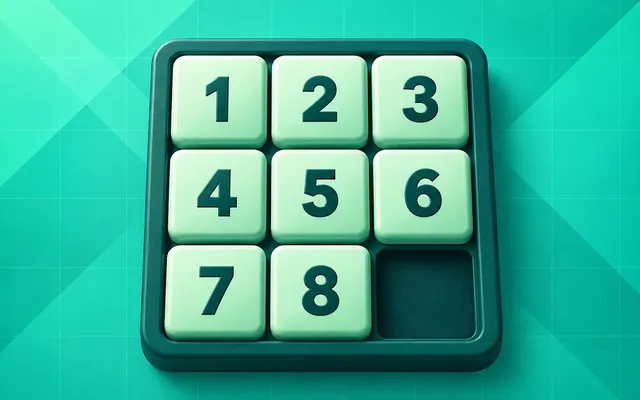 SpatialSliding PuzzlePlay three 3x3 boards by sliding tiles 1 to 8 into order. Lower move totals are better, and every score is compared with the exact 42-move minimum.PlayAbout 2-3 min
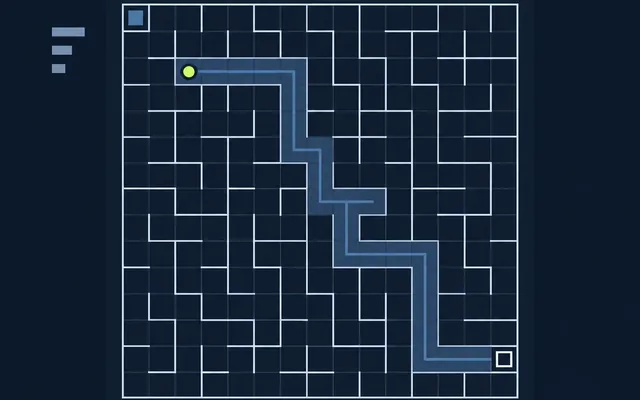 SpatialOnline Maze GameSolve a 15x15 maze online and test your path efficiency. Lower is better: 1.00 means you reached the exit with no extra steps.PlayAbout 1-2 min
This test is for self-knowledge and practice only. It reports one run of one task and is not a clinical or intelligence assessment.
Last updated: 2026-10-24 · Scores stay on this device