Cube Counting Test
Count every unit cube in each 3D stack, including cubes hidden behind or underneath, and see your score out of 8.
Count every cube in the stack - including the ones you cannot see.8 items. More right is better.
- Every column is stacked from the ground up - nothing floats
- Nothing inside is hollow
- Type the total on the keypad, then press submit
7 cubes in view, 1 buried behind them - 8 in all.
The first item is practice, so you can get a feel for it.
How to read your score
| Score | What it means |
|---|---|
| 0 to 3 of 8 correct | A Cube Counting Test score of 0–3/8 means five or more stacks were counted incorrectly or missed. Work on accuracy before speed: read each visible top as a column height, add every column once, and use the item review to find where hidden cubes were lost. This task band is not a population rank or pass mark. |
| 4 of 8 correct | A Cube Counting Test score of 4/8 means exactly half of the scored stacks were counted correctly. Use the item review to separate counting mistakes from timeouts, then repeat a fixed column-by-column method instead of tracing visible faces. This task band is not a population rank or pass mark. |
| 5 or 6 of 8 correct | A Cube Counting Test score of 5–6/8 means most stacks were counted correctly, with two or three items wrong or missed. Check whether the losses cluster in the taller stacks before changing your method, and compare the result with your own recent rounds. This task band is not a population rank or pass mark. |
| 7 of 8 correct | A Cube Counting Test score of 7/8 means one scored stack was counted incorrectly or missed. Review that item first; if repeated rounds stay at 7–8 correct, then compare median time on the same device while keeping accuracy stable. This task band is not a population rank or pass mark. |
| 8 of 8 correct | A Cube Counting Test score of 8/8 means every scored stack, including the tall 3x3 stacks, was counted correctly. For later rounds, keep accuracy at 8/8 and compare median time only under the same device and screen conditions. This task band is not a population rank or pass mark. |
This is a non-standardised adaptation, and the result cannot be exchanged with a clinical or standardised scale. These five bands are simply how many of the 8 items you counted correctly, and more right is better; they are not norms, not pass marks, and they do not say how many people you outscored. An item that ran out of time counts the same as a wrong one, because a denominator that shrank would reward stalling. One round also swings on its own, so read several of your own rounds rather than the latest one, and keep the device and the screen size the same when you compare - a smaller figure is a harder figure.
How to play
- How do you start the Cube Counting Test?: Begin with the unscored practice item. After you answer, the walkthrough labels each column height and adds the heights to show the total. Review that method, then start the 8 scored items when you are ready.
- How do you count hidden cubes in the Cube Counting Test?: Treat every visible top face as the top of a filled column. Read the height of each column, including the cubes hidden below that top face, then add the column heights once each. Do not count visible faces or guess from the outline.
- How do you submit Cube Counting Test answers?: Enter the total with the on-screen number pad and select Submit. On a physical keyboard, use the number keys, Backspace to remove the last digit, and Enter to submit. The answer can contain up to two digits.
- How much time does the Cube Counting Test allow?: Use the progress bar above the figure to judge the remaining time. Small stacks allow 7 seconds, medium stacks 11 seconds, and tall 3x3 stacks 15 seconds. If time expires before you submit, that item counts as missed.
- How is the Cube Counting Test score calculated?: Your main score is the number correct out of 8, so higher is better. Median time uses only correct items with trustworthy timing, so lower is better once accuracy is stable. Review the item table to see exactly where a count was wrong or missed.
What this measures
Count the complete solid, not only the cubes you can see. Every column is filled from the ground up, there are no hollow pockets, and every column has a visible top face that shows its height.
The round begins with 1 unscored practice item and continues with 8 scored items. The first two scored stacks contain 5–10 cubes, the next three contain 11–20, and the last three contain 18–30; their response windows are 7, 11, and 15 seconds.
Submit only after the figure appears and after you have counted it. A submission before the figure appears or within 600 milliseconds of its appearance is a false start and uses that item; 4 false starts void the round without a score.
An empty answer, zero, a leading zero, or a third digit is refused with an explanation. A submitted wrong total and an item that reaches its time limit both count as incorrect in the fixed score out of 8.
Median time is calculated only from correct items whose timing is trustworthy. If the page freezes for more than 600 milliseconds during an item, that item's answer still counts but its time is excluded; a freeze over 3 seconds ends the round without a score.
Stay on the page until all 8 scored items finish. Switching tabs, locking the screen, refreshing, or ending the round early discards the unfinished round, and it cannot be resumed later.
This test has no reference sample, so it cannot tell you how many people you outscored. Compare several of your own rounds on the same device and screen size, looking for higher accuracy first and lower median time only after accuracy is steady.
FAQ
What does the Cube Counting Test measure?
The Cube Counting Test focuses on reconstructing a solid 3D stack from one flat view, keeping track of hidden cubes, and adding column heights accurately; it does not measure rotation, folding, clinical ability, or general intelligence. The result describes your performance on these 8 stacks only.
How do you solve a Cube Counting Test?
To solve a Cube Counting Test reliably, treat every visible top face as the top of a filled column, remember that column's height, then add all the heights once each. Check the back corners before submitting, because a shorter column partly hidden behind a taller one is the easiest to miss.
What is a good Cube Counting Test score?
On this 8-item Cube Counting Test, 7/8 or 8/8 means you counted nearly every stack correctly, while 5–6/8 means you solved most items; these are task bands, not population norms or pass marks. Compare several of your own rounds on the same device before treating a change as meaningful.
How long should the Cube Counting Test take?
The full Cube Counting Test usually takes about one to two minutes, but there is no fixed total limit because the practice explanation waits for you before the 8 scored items begin. Individual response windows are 7, 11, and 15 seconds as the stacks become more complex.
How do you improve at the Cube Counting Test?
The most useful Cube Counting Test practice is to build accuracy with a fixed column-by-column routine, then compare median time only after your score is stable across several rounds on the same device. Review every missed stack, especially its back columns, instead of repeating rounds without checking the error.
Why does the Cube Counting Test include hidden cubes?
Hidden cubes make the Cube Counting Test a reconstruction task: you must infer the solid support beneath visible top faces instead of simply counting the cubes that the drawing shows. Every scored stack contains at least one hidden cube, so the visible-cube count is never the correct total.
Related games
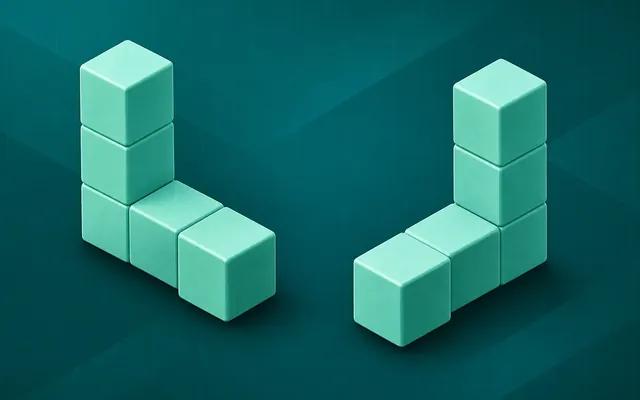 SpatialMental Rotation TestTwo block figures at different angles: same object turned, or mirror images? 18 items.PlayAbout 1-2 min
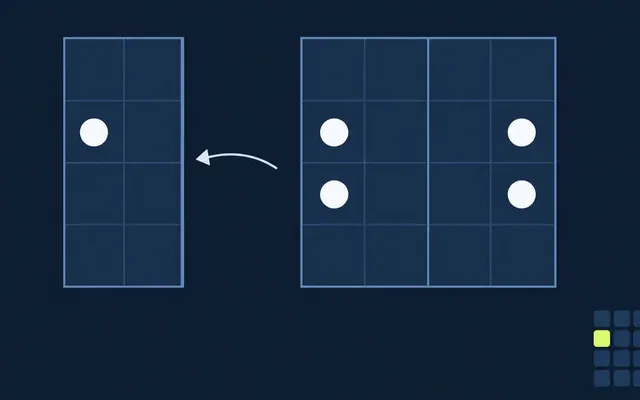 SpatialPaper Folding TestA square sheet is folded, then punched once. Pick the unfolded sheet whose holes are in the right places.Play59 seconds of scoring
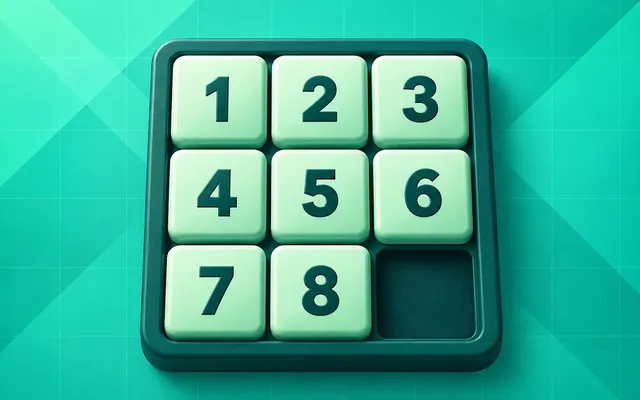 SpatialSliding PuzzlePlay three 3x3 boards by sliding tiles 1 to 8 into order. Lower move totals are better, and every score is compared with the exact 42-move minimum.PlayAbout 2-3 min
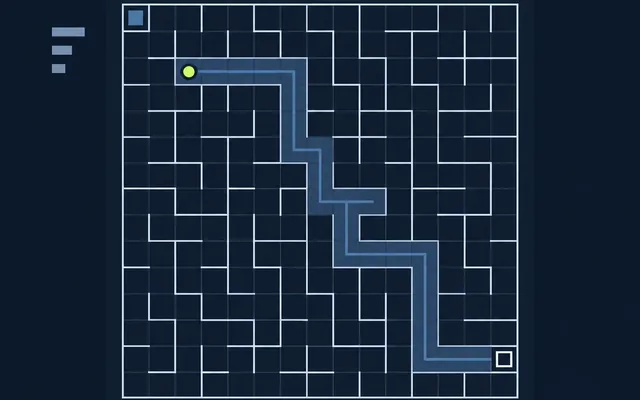 SpatialOnline Maze GameSolve a 15x15 maze online and test your path efficiency. Lower is better: 1.00 means you reached the exit with no extra steps.PlayAbout 1-2 min
This test is for self-knowledge and practice only. It reports one run of one task and is not a clinical or intelligence assessment.
Last updated: 2026-10-13 · Scores stay on this device